The establishment must fully comply with the environmental standards prescribed by the Government of Nepal, as updated periodically.
During the industry registration process, the applicant must submit a detailed Environmental Mitigation Plan, demonstrating effective mitigation measures for environmental impacts associated with brewery operations.
The mitigation plan submitted at registration becomes binding and must be strictly implemented.
4. Quality Control Standards
Beer produced in the micro-brewery must not exceed 6% alcohol by volume.
An in-house quality-control mechanism, supported by a functional laboratory, is mandatory
5. Structural, Technical, and Material Requirements
The micro-brewery must be located in a permanent (RCC or brick) structure.
Separate dedicated areas must be provided for:
- raw material storage,
- the brewing/production area, and
- storage of the finished product.
Only certified malt may be used.
- If local Nepali malt is used, it must carry a quality-assurance certificate from the producer.
Installation of a Clean-in-Place (CIP) system is compulsory.
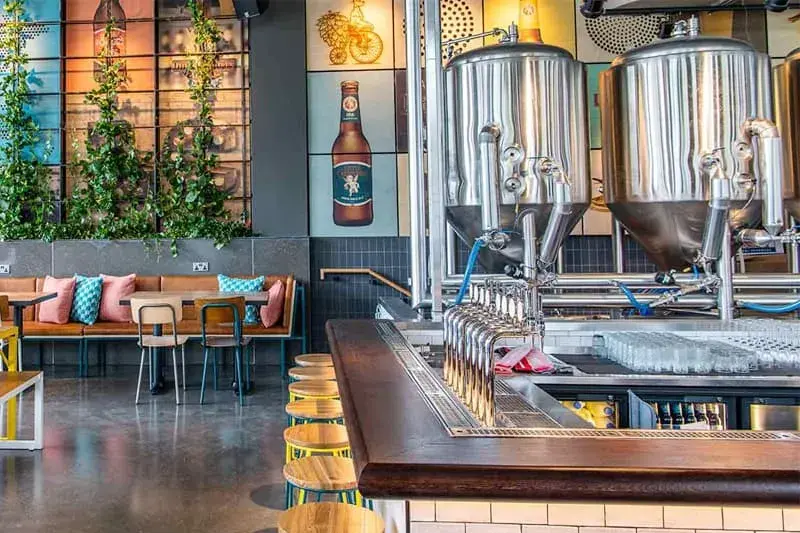
Tanks and pipelines must be made of stainless steel, any plastic pipes must be food-grade only.
The micro-brewery must operate solely on electricity, use of other fuel types is prohibited.
6. Water and Product Standards
Water used for production must meet the potable water standards set by the Department of Food Technology and Quality Control (DFTQC).
Finished beer must comply with the Nepal Quality Standards (NQS).
Use of sugar as an adjunct during brewing is strictly prohibited.
All production must be carried out under the direct supervision of an alcohol technologist or food technologist to ensure quality assurance.
7. Taxation and Revenue Compliance
8. Investment, Licensing, and Ownership Requirements
The Board will grant permission for restaurant-based micro-breweries only in locations deemed suitable based on population, tourism presence, and commercial significance.
A security deposit of NPR 1,000,000 (one million) must be submitted before establishment.
The applicant must retain at least 50% ownership in the micro-brewery for the first two years of commercial operation.
Commercial production must commence within two years from the date of license issuance.
Bottling or selling beer outside the restaurant premises is strictly prohibited.
All legal provisions applicable to standard brewery industries will also apply to micro-breweries.
Foreign Direct Investment (FDI) is not permitted in micro-brewery establishments
Process Involved
Step 1 - User Creation at DOI Online Portal (lms.doind.gov.np)
Step 2 - Submission of Application and Documents
Step 3 - Physical Submission of Documents
Step 4 - Board Meeting of DOI and Granting of Letter of Intent
Step 5 - Security Deposit NPR 1,000,000 (one million).
Step 6 - Operation and Liscense Application (within 2 years)
Step 7 - Physical Examination and Payment of Liscense Fee
Step 8 - Liscense
Conclusion
Nepal’s micro-brewery regulations are designed to promote controlled, tourism-driven beer production while ensuring health, environmental, and consumer safety standards. Restaurant owners and investors must navigate a detailed compliance framework to obtain approvals and operate lawfully.
Note: Sherpa Law Associates offers complete legal advisory, compliance support, licensing assistance, and documentation services for setting up micro-breweries, restaurants, and other hospitality ventures in Nepal. For professional consultation contact us at Email: sherpalaw.nepal@gmail.com, phone no: +977 9846000030.
Disclaimer: This article is published for general informational and educational purposes only and does not constitute legal advice, legal opinion, or professional consultation. The information provided should not be relied upon as a substitute for obtaining legal advice tailored to your specific circumstances. Reading this article or using this website does not create a lawyer-client relationship. The firm and its members disclaim all liability for any loss or consequences arising from reliance on the information contained herein. If you require legal advice regarding your particular matter, please consult a qualified legal professional.